
Paper, Card, and Envelope Specifications
Dimensions
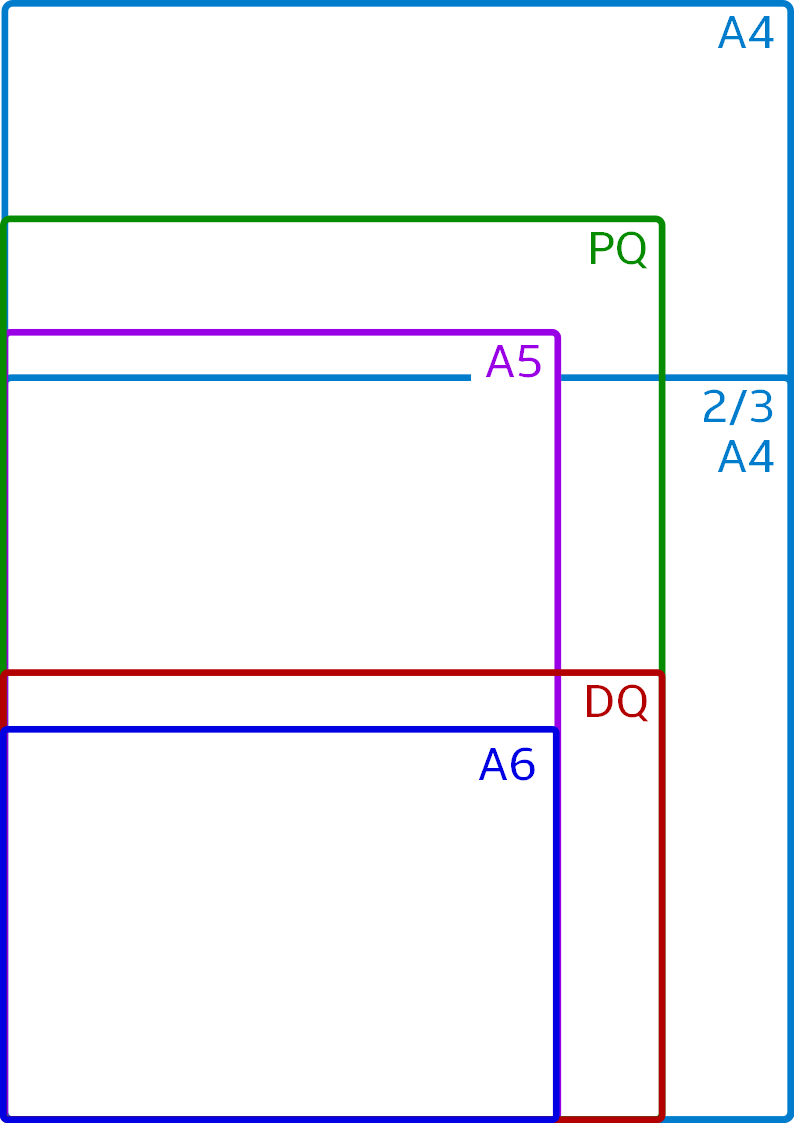
| Paper Size | Millemetres | Inches (Approx) |
|---|---|---|
| A4 | 210 x 297 | 8 1/4 x 11 3/4 |
| 2/3 A4 | 210 x 198 | 8 1/4 x 7 3/4 |
| Post Quarto | 176 x 240 | 7 x 9 1/2 |
| A5 | 148 x 210 | 5 3/4 x 8 1/4 |
| Demi Quarto | 176 x 120 | 7 x 4 3/4 |
| A6 | 148 x 105 | 5 3/4 x 4 1/8 |
| Envelope Size | Millemetres | Inches (Approx) |
|---|---|---|
| C6 suits A6 cards, or A5 folded in half |
114 x 162 | 4 1/2 x 6 1/2 |
| DQ suits Demi Quarto cards, or Post Quarto folded in half |
133 x 184 | 5 1/4 x 7 1/2 |
| DL suits A4 folded in three, or 2/3 A4 in half |
110 x 220 | 4 1/4 x 8 1/2 |
Paper & Card Grades
Your stationery will be printed on a range of fine paper and card that's carefully selected from Italian and British paper producers.
Exploring the paper types
Wove
Wove is a smooth, uncoated paper. If you're as old as me, you may have referred to it as bond paper back in the day. It is the most popular stock for day-to-day writing at an entry-level price.
'Ultimo' is the heavy weight version of smooth wove, uncoated paper. Available in white and cream, it weighs in at 170gsm, comprared to the regular 120gsm.
Laid
Laid paper has a ribbed, textured surface that adds a tactile feel to the paper. It harks back to the times before the mechanisation of paper making.
Felt Marked - Old English
I love this paper. Whilst I call it the Old English range due to its soft shades of Old English White and Ivory, it comes from an Italian paper manufacturer that traces its origins to Verona in the late 1800s. The felt marking is subtle and created while the paper is still wet. The pattern is born with the paper: soft, natural, all over. I think of it as being akin to the surface of freshly fallen snow.
Ultra Cards
Ultra cards are a double thickness card produced by gluing two sheets together. In the trade, this is known as duplexing. Simply put, a 350 micron card becomes 700 micron. As well as double thickness, the gluing process adds rigidity to the finished product. You'll find there is the option to choose card colours for both the front and back. You don't necessarily have to keep them the same colour - mix and match as you please.
I'm often asked which paper is better . . . the answer is down to personal preference and budget.
Fountain Pen use
All of the paper and card is fountain pen friendly. All I'd say, is that if you write lengthy, multi-page letters, then a textured laid paper may become a little tiresome due to the surface resistance for the pen to glide smoothly.
Paper, Card, and Envelope Product Specification Overview
Here's a summary of the grades of paper and card that I use in the production of your stationery. I'm not sure how to tell you that a 350 micron card is good quality; perhaps reading customer's 5 star reviews may give you the confidence that you'll not be disappointed.
-
Wove350 microns
-
Laid400 microns
-
Wove Ultra700 microns
-
'Basic' Range300 microns
-
Old English Card500 microns
-
Old English Ultra Card1000 microns
-
Wove & Laid120gsm
-
Old English130gsm
-
Colorata Range100gsm
-
'Basic' Range100gsm
-
Wove & Laid120gsm
-
Ultimo170gsm
-
'Basic' Range100gsm
-
Wove & Laid120gsm
-
Colorata Range100gsm
-
'Basic' Range100gsm
-
Wove Paper170gsm
-
Laid Paper120gsm
-
Wove Card350 microns
-
Laid Card400 microns
-
Grande 500500 microns
-
Ultra 700700 microns
-
Wove & Laid120gsm
-
Wove & Laid Paper120gsm
-
Wove Ultimo170gsm
-
Wove Card350 microns
-
Laid Card400 microns
-
Wove & Laid120gsm
-
Wove Ultimo Paper170gsm
-
Old English130gsm
-
Wove Card350 microns
-
Wove Ultra Card700 microns
-
Old English Card500 microns
-
Old English Ultra Card1000 microns
-
Wove C6120gsm
-
Wove DQ140gsm
-
Old English130gsm
-
Don't underestimate the feel of 130gsm Old English as it's a thick as 170gsm Wove and carries itself very well in the hand
-
Wove700 microns
-
Wove & Laid120gsm
-
Wove350 microns
-
Wove & Laid120gsm
-
Wove350 microns
-
Wove Ultra700 microns
-
Wove & Laid120gsm
-
Wove350 microns
-
Wove & Laid120gsm
-
Wove350 microns
-
Ultra Heavy700 microns
-
--